Find PII leaks with synthetic data, so real customer data stays safe
Marketing pixels can quietly send names, emails, and health details to ad networks inside their payloads, and that has been at the center of FTC, state and European enforcement. DataTrue tests for that leakage using fictitious personas, fake profiles with fake data, so you can prove whether your tags are leaking without exposing a single real customer to find out.
The full platform, every feature, free for 30 days.
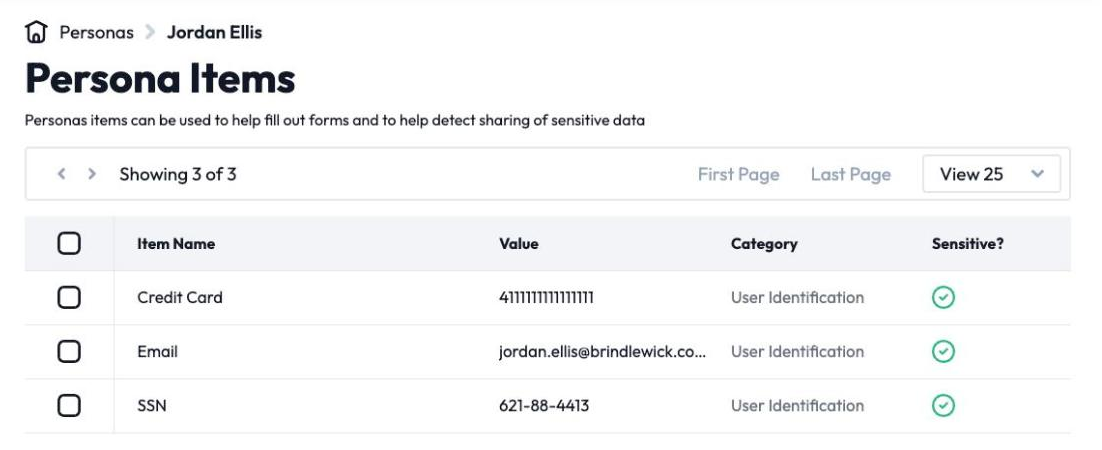
PII leak detection is finding personally identifiable information, such as names, emails, or health details, being sent to third parties like ad networks inside tag and pixel payloads. DataTrue tests for it with fictitious persona profiles filled with fake data, so it can catch leakage to Meta, Google, and LinkedIn without ever risking real customer data.













How do you test for PII leaks safely?
Testing for PII leakage with real traffic is a problem in itself: the test puts real customer data at risk to find out whether it is at risk. DataTrue avoids that entirely. It injects a fictitious persona, a fake name, email, and card number, drives it through your site, and inspects exactly what leaves in each tag’s payload.

If a pixel sends that data to a third party, you see it, and no real person was ever involved.
Apply your data governance rules to each coverage scan
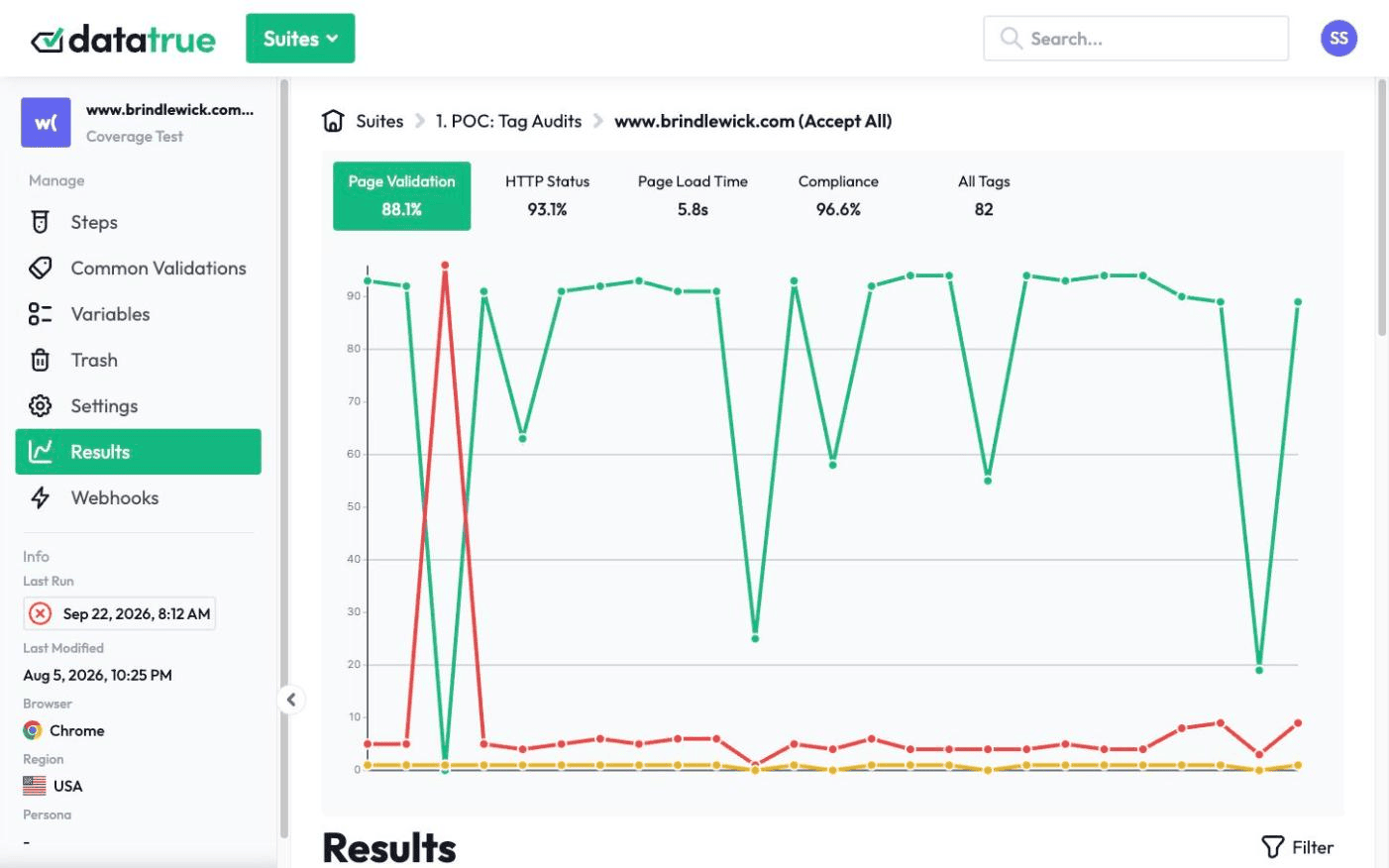
Set your data governance policy once, and have each coverage scan enforce it. Flag which vendors and tags are approved, and if unencrypted PII, such as a card number, is sent to a domain that isn’t on the list, DataTrue raises an alert.

Read exactly what each tag sent, on web and in apps
Payload inspection is not limited to the website. DataTrue reads what tags transmit on your live site and inside native mobile apps, so a leak in an app SDK is as visible as one on the web. See mobile app analytics testing.
Flag tags your policy doesn’t allow
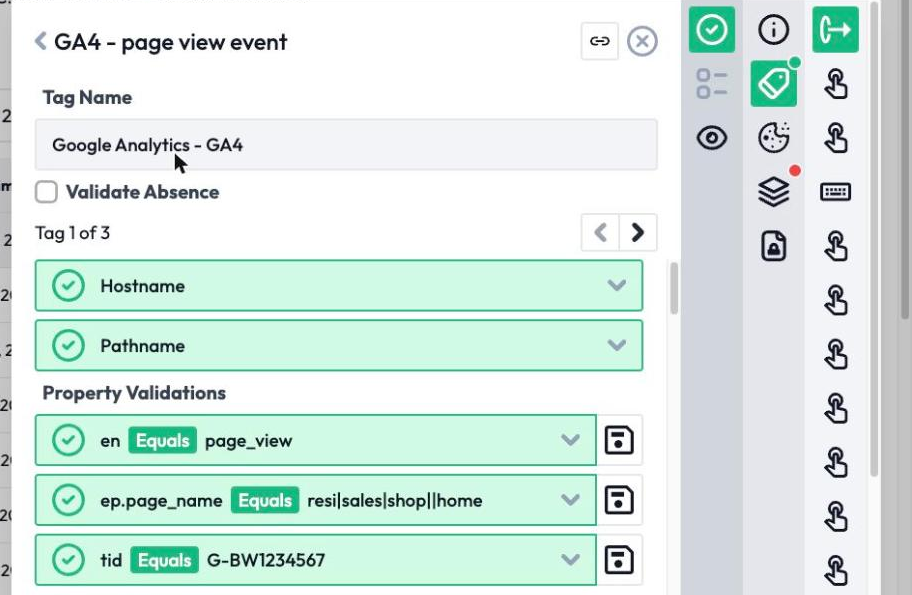
A pixel added by a marketer or piggybacked by another vendor can be the source of an unexpected leak. Mark each tag as required, allowed or not allowed, and each coverage scan flags a tag that breaks the policy. See continuous monitoring & alerting.
Built for the enforcement reality
Health, retail and media companies have all faced regulator action or lawsuits over pixels. DataTrue is built for that reality, so you can prove your pixels are not leaking before it becomes a case. For the enforcement actions and which laws apply, see Enforcement Watch and the Privacy Resources.
Prove tags neither leak PII nor fire before consent
PII testing pairs with consent validation: the same test can confirm a tag stays silent until a visitor consents, and never leaks PII when it does fire. See consent & cookie compliance.
Nothing is installed on your site. DataTrue doesn’t ask you to add any script, tag or code to your pages, so there is nothing to remove if you stop.
Find out what your pixels are really sending, safely.
Start a free 30-day trialQuestions
What is PII leak detection?
Finding personal data, such as names, emails, or health details, being sent to third parties inside tag and pixel payloads. DataTrue tests for it using fictitious personas.
How can you test for leakage without using real customer data?
DataTrue injects fake persona profiles and inspects what the tags transmit, so no real customer data is ever put at risk.
Which destinations commonly receive leaked PII?
Third-party tags and pixels, such as Meta, Google and LinkedIn, in the request payload.
Does this cover mobile apps?
Yes. Payloads are inspected across web and native mobile.
Isn’t a consent banner enough to prevent this?
No. A banner governs consent. It does not control what a tag puts in its payload, so a tag can fire with consent and still leak PII.
Resources: PII compliance, keeping PII private, consent verification. Stakes: Enforcement Watch.
Put your tag and consent testing on a schedule
DataTrue runs coverage scans, journeys and consent checks on your live site, reads what each tag sends, and alerts your team when a result changes. There’s nothing of ours to install on your pages.
- Every page, with coverage scans
- Scheduled runs, with alerts when a result changes
- Full journeys, like checkout and signup, in each consent state
- What each tag sent, field by field
- PII detection with test personas
- iOS and Android app testing
- Pre-publish testing for GTM and Adobe Tags
- REST API, plus Slack and Jira alerts
The full platform, every feature, free for 30 days.