Is the Meta Pixel Legal?

Summary
VerdictYes, as a tool.
Yes, the Meta Pixel is legal as a tool. Whether your deployment is legal turns on three things: whether you have consent before it fires, what data it collects, and where that data goes. The lawsuits target deployments that fire before consent, collect sensitive data, or send identifiable information to Meta without a basis.
The Meta Pixel, also called the Facebook Pixel, is a snippet of code that reports activity from your site to Meta so you can measure and target advertising. Nothing about installing it is unlawful. The legal questions all attach to how it is configured and where it runs.
The sections below cover what makes a Meta Pixel deployment illegal and which laws apply to it. The last section shows how to check that your pixel is deployed legally.
What makes a Meta Pixel deployment illegal?
A few specific things move a pixel from legal to a liability.

It fires before consent. A pixel that reports activity before the visitor agrees is collecting without a basis under EU and UK cookie rules, and it is the fact pattern behind wiretap and pixel class actions.
It captures sensitive data. A pixel on a health intake page, a checkout, or a form can pick up a diagnosis, an email, or a payment detail from fields it was never meant to read, and send that to Meta.
It reveals what someone watched. On a page with video, a pixel that sends the video plus an identifier is the pairing the Video Privacy Protection Act restricts.
It sends identifiable data without a lawful basis. In the EU, passing personal data to Meta through the pixel needs consent. In California, it’s a “share” people can opt out of, including through GPC, and ignoring that opt-out is the violation.
Which laws apply to the Meta Pixel?
The pixel shows up under several laws at once, depending on your site and your visitors. Each has its own page.
California wiretapping (CIPA). The exposure when the pixel fires without consent and captures a visitor’s activity. Does the Meta Pixel violate CIPA?
Video privacy (VPPA). The exposure on pages with video, when the pixel sends what was watched with an identifier. Does the Meta Pixel violate VPPA?
Health privacy (HIPAA). The exposure when a covered entity runs the pixel on pages that handle protected health information. Is Google Analytics HIPAA compliant? covers the rule that applies to any tracking vendor that receives PHI: without the patient’s authorization, it needs a BAA and a Privacy Rule permission.
GDPR and CCPA/CPRA. The consent and data-sharing exposure for visitors in the EU and California. GDPR for analytics tags · CCPA and CPRA for tags
For specific Meta Pixel lawsuits and settlements, see our Enforcement Watch tracker.
How to check your pixel is deployed legally
The legality of your deployment comes down to observable behavior: when the pixel fires, what it collects, and where it sends it. That is testable.
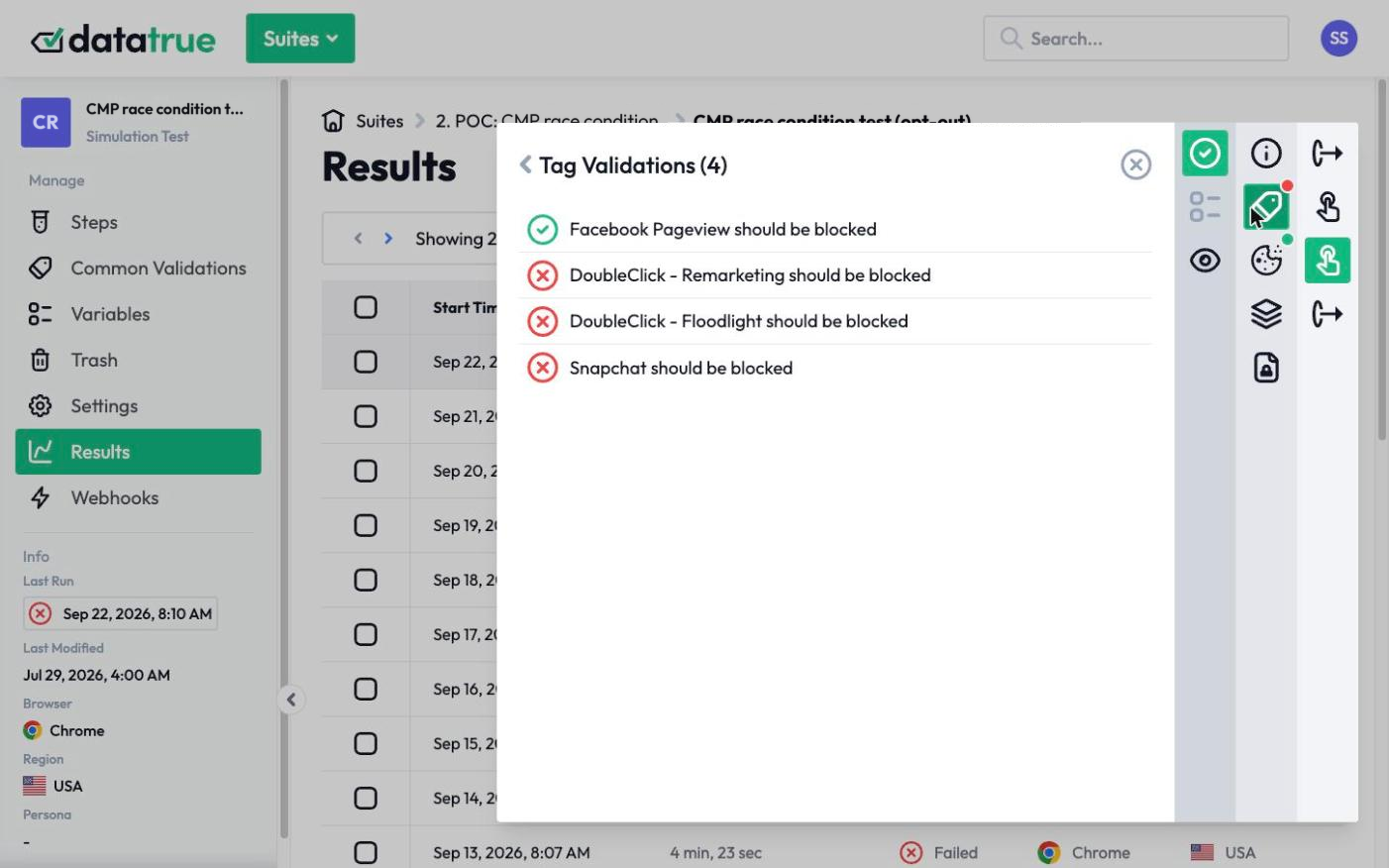
DataTrue loads your site in a real browser and records what the Meta Pixel sends and when. It confirms whether the pixel fires before consent, on which pages, and what data each request carries, including on sensitive pages and pages with video. Sensitive Data Detection inspects the payloads with fictitious personas, so you can see whether personal or health data is going to Meta without ever using a real visitor. The result is a record of where your pixel is behaving in a way that creates exposure, and of when that behavior stops. DataTrue gives teams tools to help them become and stay compliant. It does not certify compliance.
See how consent verification works
Questions
Is the Meta Pixel legal?
Yes, as a tool. Whether your deployment is legal depends on whether it fires only after consent, what data it collects, and where that data goes. Sites run it lawfully every day. The exposure comes from firing before consent, collecting sensitive data, or sending identifiable data to Meta without a basis.
Why are companies being sued over the Meta Pixel then?
The suits target specific behavior, not the tool: pixels that fire before consent, capture health or other sensitive data, or send what a person watched on a video page. Claims run under laws like CIPA and the VPPA, and regulators act under the GDPR, the CCPA and HIPAA.
How do I make sure my Meta Pixel is compliant?
Confirm it fires only after consent, keep it off pages that handle sensitive or health data unless you have a basis, and verify with testing what it actually sends and when. The exposure is in the real payload, so checking behavior is how you find it.
Do I have to remove the Meta Pixel?
Usually no. Most exposure is fixed by gating the pixel behind consent and controlling what it collects on sensitive and video pages, not by removing it. Testing tells you which pages need attention.
See what your tags do in every consent state
DataTrue loads your real pages as a visitor who accepts, rejects, or sends an opt-out signal, and reads what each tag sends. A tag that ignores the visitor’s choice shows up in a test.
- Every page, with coverage scans
- Scheduled runs, with alerts when a result changes
- Full journeys, like checkout and signup, in each consent state
- What each tag sent, field by field
- PII detection with test personas
- iOS and Android app testing
- Pre-publish testing for GTM and Adobe Tags
- REST API, plus Slack and Jira alerts
The full platform, every feature, free for 30 days.