LinkedIn Insight Tag: What Data It Collects and the Privacy Risk
At a glance
LinkedIn Insight Tag
Privacy riskWhy Medium?
Medium- Category
- Advertising / B2B retargeting
- Sends data to
- LinkedIn (Microsoft)
- Still in use?
- Yes
- Collects hashed PII?
- Not unless you enable enhanced matching
- DataTrue detects it as
Linkedin Analytics
Summary
The LinkedIn Insight Tag is LinkedIn’s B2B advertising tag for retargeting and conversion tracking. On every page load it collects the visitor’s IP address, browser and device details, page URL, referrer, and a LinkedIn identifier, and when the visitor is logged in to LinkedIn it can connect that activity to their profile. Its privacy risk is medium.
What is the LinkedIn Insight Tag?
Advertisers use the Insight Tag to measure conversions from LinkedIn ads and to retarget site visitors on LinkedIn itself.
What does the LinkedIn Insight Tag collect?
Per LinkedIn, for every page load the tag collects the visitor’s IP address, browser and device characteristics, page URL, referrer, and a timestamp. LinkedIn truncates or hashes the IP addresses. New tags use a first-party cookie, li_fat_id, by default. When a visitor is logged in to LinkedIn, the data can be connected to their LinkedIn profile. LinkedIn’s cookie table lists li_fat_id (first-party, 30 days), UserMatchHistory (LinkedIn Ads ID syncing, 30 days) and li_sugr (probabilistic identity matching, 90 days) among the cookies it sets on third-party sites. If you enable enhanced matching, the tag also sends email addresses, hashed on your site before they go to LinkedIn.
Where does the data go?
To LinkedIn, owned by Microsoft, where it is used to attribute conversions, build audiences, and target ads on LinkedIn. LinkedIn states it removes members’ direct identifiers within seven days and deletes the remaining pseudonymized data within 180 days.

With and without consent
The tag fires on page load, so it can collect data before a visitor consents unless it is gated. Its notable feature is that, for logged-in LinkedIn members, activity can be linked to a real professional identity, which is worth accounting for in your consent handling.
Privacy risk:Medium
The LinkedIn Insight Tag rates medium. It sends hashed personal data from your site only if you enable enhanced matching. The counterweight is that it can tie browsing on your site to a real, named professional profile for logged-in members, which is a meaningful identity linkage. Whether a given setup is compliant depends on your configuration and region. See the Privacy & Compliance resources for the legal question.
Privacy risk is rated on four factors: breadth and sensitivity of data collected, hashed PII, third-party sharing and reach, and documented enforcement or litigation exposure. It is a data-and-exposure read to help prioritize what to check, not a legal determination.
Is the LinkedIn Insight Tag still in use?
Yes. Advertisers use it to measure conversions from LinkedIn ads and to retarget visitors on LinkedIn.
How DataTrue detects the LinkedIn Insight Tag
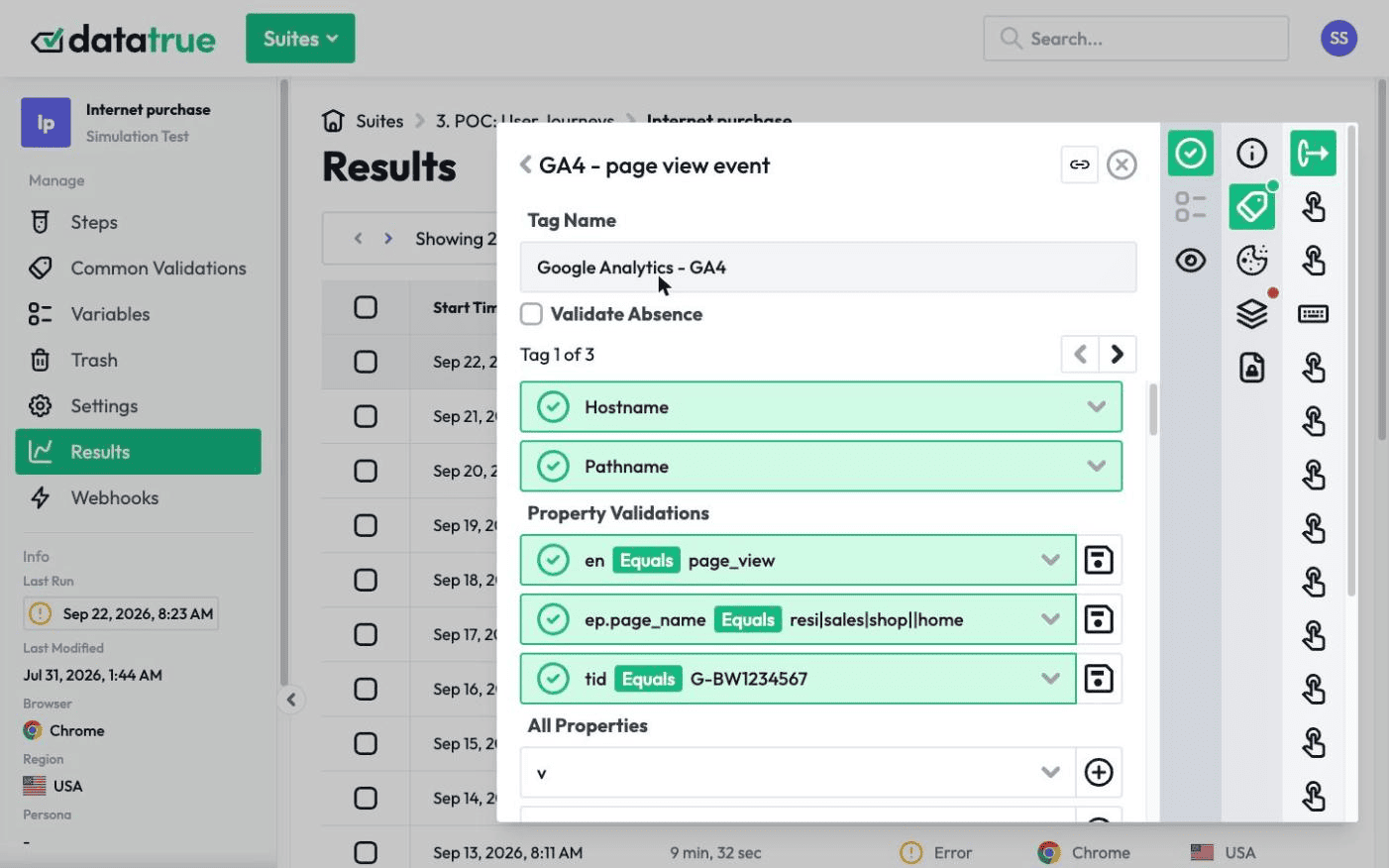
DataTrue recognizes it as the Linkedin Analytics tag type. Coverage tests find it across your site, and Simulation tests read what it sends at each step and in each consent state, including whether it fires before consent. For how this works in the product, see the Web Analytics Testing page.
Questions
What data does the LinkedIn Insight Tag collect?
The visitor’s IP address, browser and device characteristics, page URL, referrer, and timestamp on every page load, and it sets advertising cookies. With enhanced matching on, it also sends hashed email addresses. For logged-in members the data can link to their LinkedIn profile.
Does the LinkedIn Insight Tag identify individual people?
For visitors logged in to LinkedIn, the collected activity can be connected to their LinkedIn profile. For others it uses a pseudonymous identifier.
What cookies does the LinkedIn Insight Tag set?
LinkedIn’s cookie table lists li_fat_id (first-party, 30 days), UserMatchHistory (30 days) and li_sugr (90 days) among the cookies it sets on third-party sites. UserMatchHistory and li_sugr are on LinkedIn’s own domains. Cookies like these are typically listed under a marketing or advertising category in a cookie policy.
Is the LinkedIn Insight Tag a privacy risk?
Medium. It sends hashed personal data from your site only if you enable enhanced matching, but it can tie browsing to a real professional identity for logged-in members. Whether a given setup is compliant is a separate legal question.
Sources: LinkedIn Insight Tag FAQs, linkedin.com/help/lms/answer/a427660.
Know what your tags send, page by page
DataTrue runs real journeys on your site and checks each tag’s data against what you expect, field by field. A missing event or a wrong value shows up in a test before it reaches a report.
- Every page, with coverage scans
- Scheduled runs, with alerts when a result changes
- Full journeys, like checkout and signup, in each consent state
- What each tag sent, field by field
- PII detection with test personas
- iOS and Android app testing
- Pre-publish testing for GTM and Adobe Tags
- REST API, plus Slack and Jira alerts
The full platform, every feature, free for 30 days.