Does the Meta Pixel Violate CIPA?
Summary
VerdictIt depends.
Not automatically. The Meta Pixel creates California Invasion of Privacy Act (CIPA) exposure when it fires without a visitor’s consent and captures their activity in a way a court could treat as an intercepted communication. The pixel is legal as a tool. Consent before it fires, and control over what it reads, reduce the risk.
CIPA is a California anti-wiretapping law that plaintiffs now apply to website tracking. The claim against a pixel is that it lets a third party, Meta, observe a visitor’s interaction with your site without permission, which the law treats like tapping a communication.
The sections below apply the wiretap theory to the pixel, then show how to check your site and how to reduce the exposure. Specific Meta Pixel lawsuits and settlements are covered in Enforcement Watch.
The wiretap theory applied to the pixel
CIPA’s Section 631 prohibits reading the contents of a communication without consent, and aiding a third party in doing so. Applied to the Meta Pixel, the argument is that your site lets Meta “eavesdrop” on the visitor: as the visitor acts on the page, the pixel reports that activity to Meta in real time, and the visitor never agreed. CIPA does not require the plaintiff to show intent to harm or financial loss, though the interception must be willful or intentional. Section 637.2 lets a private plaintiff seek the greater of $5,000 per violation or three times actual damages, so these claims can scale across many visitors.

The exposure attaches at the point of collection, before anyone consents. A pixel that begins reporting on page load, ahead of the banner, is the fact pattern these suits target.
For specific Meta Pixel CIPA lawsuits and settlements, see our Enforcement Watch tracker.
How to check your site
The concrete question is whether the Meta Pixel fires before your visitors consent, and what it captures when it does.
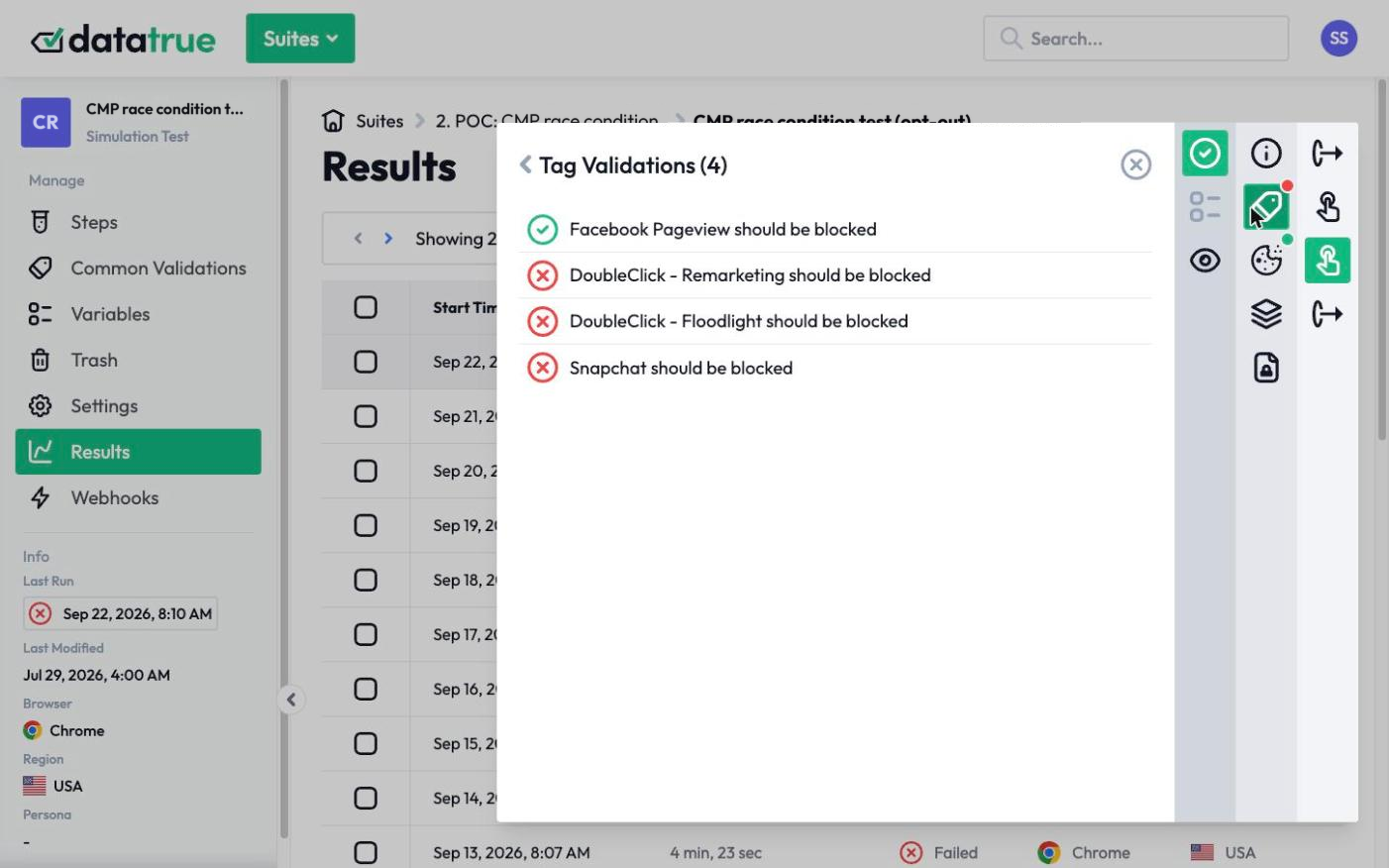
DataTrue loads your site in a real browser, in a no-consent state, and records what the pixel sends and when. You can see whether it fires before the banner is answered, on which pages, and what data it reports. Sensitive Data Detection inspects those payloads with fictitious personas, so you learn what the pixel is reading without using a real visitor. The result is a record of exactly where the pixel is firing before consent.
How to reduce the exposure
Get consent before the Meta Pixel fires, which removes the “without permission” element the claim depends on. And confirm with testing that it actually waits, including on pages where a tag manager change or a hardcoded copy of the pixel might fire it early.
Questions
Does the Meta Pixel violate CIPA?
Not automatically. It creates CIPA exposure when it fires without consent and captures a visitor’s activity in a way a court could treat as an intercepted communication. The pixel is legal as a tool. The risk comes from firing it before consent on a site California residents use.
What is the wiretap theory against the pixel?
CIPA’s Section 631 bars helping a third party read a communication without consent. The argument is that your site lets Meta observe the visitor’s activity in real time through the pixel, without the visitor agreeing, which the law treats like an unauthorized interception.
How do I reduce Meta Pixel CIPA exposure?
Get consent before the pixel fires, and verify with testing that it actually waits on every page, including where a hardcoded or tag-manager copy might fire it early. Confirming it does not collect before consent is the practical defense.
See what your tags do in every consent state
DataTrue loads your real pages as a visitor who accepts, rejects, or sends an opt-out signal, and reads what each tag sends. A tag that ignores the visitor’s choice shows up in a test.
- Every page, with coverage scans
- Scheduled runs, with alerts when a result changes
- Full journeys, like checkout and signup, in each consent state
- What each tag sent, field by field
- PII detection with test personas
- iOS and Android app testing
- Pre-publish testing for GTM and Adobe Tags
- REST API, plus Slack and Jira alerts
The full platform, every feature, free for 30 days.